
The Surreal World of Edward Gorey
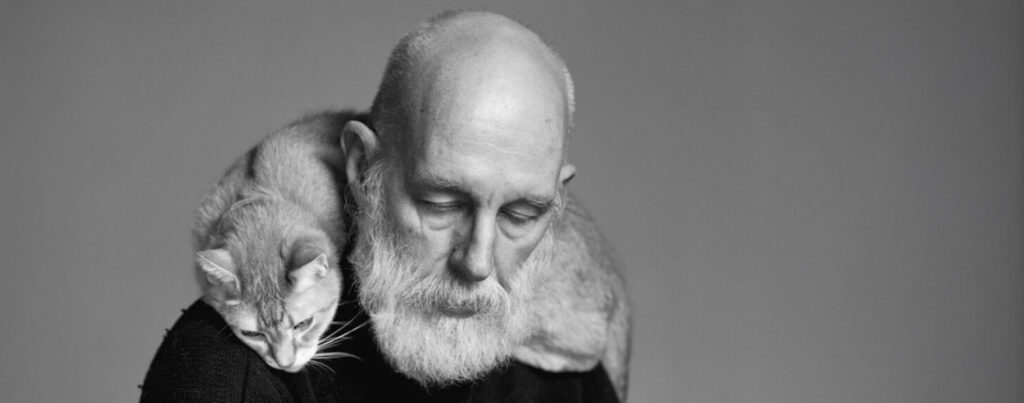
Edward Gorey remains a singular figure in the world of illustration and storytelling, a master of macabre whimsy and enigmatic tales. His surreal, gothic-inspired artwork and eccentric narratives have captivated audiences for decades, bridging the gap between the eerie and the absurd. Gorey’s works are instantly recognizable, defined by their intricate crosshatching, darkly humorous tone, and Victorian sensibilities. A deeply private and enigmatic individual himself, Gorey created a body of work that invites readers into a peculiar world—one where tragedy and comedy are intertwined, and the ordinary is imbued with an unsettling charm.
Early Life and Influences
Edward St. John Gorey was born on February 22, 1925, in Chicago, Illinois. From an early age, Gorey exhibited an unusual flair for the arts, developing a fascination with literature, theater, and visual storytelling. He briefly attended the Art Institute of Chicago before being drafted into the U.S. Army during World War II. Following the war, Gorey enrolled at Harvard University, where he studied French literature and immersed himself in the vibrant intellectual community of Cambridge, Massachusetts.
During his time at Harvard, Gorey became friends with a circle of creatives that included Frank O’Hara and John Ashbery. This exposure to avant-garde ideas and artistic experimentation left a lasting impression on his work. Gorey’s influences ranged widely, from Edwardian literature and silent films to surrealist art and the macabre humor of Edward Lear and Lewis Carroll. These eclectic inspirations coalesced into a style that defies categorization, blending elements of gothic horror, absurdism, and fine art.
The Art of the Unsettling
Edward Gorey’s illustrations are characterized by their meticulous detail and distinctive aesthetic. His signature technique—dense crosshatching—lends his drawings a rich texture and depth that is reminiscent of 19th-century etchings. This style perfectly complements the eerie and otherworldly quality of his subject matter. Gorey often depicted crumbling mansions, shadowy figures, and forlorn children in scenes that suggest both whimsy and menace.
One of Gorey’s most remarkable talents was his ability to evoke emotion and atmosphere with minimal text. Many of his works, such as The Gashlycrumb Tinies (1963), employ sparse, rhyming verses to accompany the illustrations. This alphabet book of unfortunate children’s deaths is a prime example of Gorey’s dark humor and subversive take on traditional storytelling. The juxtaposition of morbid themes with playful language creates a dissonance that is both unsettling and delightful.
Gorey’s surrealism often lies in the ambiguity of his narratives. His stories rarely follow conventional structures, leaving much to the reader’s imagination. For instance, in The Doubtful Guest (1957), a mysterious, penguin-like creature arrives unannounced at a family’s home and proceeds to wreak havoc in inexplicable ways. The lack of explanation for the guest’s presence or behavior heightens the surreal quality of the tale, inviting readers to revel in its absurdity.
Gorey’s Theater and Multimedia Work
While Gorey is best known for his illustrated books, his creative endeavours extended far beyond the page. A lifelong lover of theatre, Gorey designed sets and costumes for numerous productions, including the 1977 Broadway revival of Dracula. His work on this production earned him a Tony Award for Best Costume Design, a testament to his ability to translate his visual style into three-dimensional forms.
Gorey’s theatrical sensibilities are evident in his illustrations, which often resemble stage sets, complete with dramatic lighting and carefully arranged props. This connection to theater also influenced his sense of timing and pacing in storytelling, as many of his books unfold like miniature plays, with characters entering and exiting in surreal, almost choreographed sequences.
In addition to theater, Gorey’s work found its way into television. He created the animated opening credits for the PBS series Mystery!, which introduced his macabre sensibility to a wider audience. This animation, with its shadowy figures and gothic motifs, became iconic, cementing Gorey’s reputation as a master of the eerie and the enigmatic.
Legacy and Influence
Edward Gorey’s impact on art and culture is vast, influencing generations of writers, illustrators, and filmmakers. His work resonates with creators who share his love for the uncanny and the absurd. Tim Burton, Neil Gaiman, and Daniel Handler (Lemony Snicket) are among those who have cited Gorey as an inspiration, and his influence can be seen in their own explorations of dark humor and surreal narratives.
Gorey’s appeal lies in his ability to capture the duality of existence—the coexistence of joy and sorrow, beauty and grotesquery. His works invite readers to embrace the unknown and find humor in life’s peculiarities. Despite their often grim themes, Gorey’s stories are ultimately a celebration of creativity and imagination, encouraging audiences to see the world through a different lens.
Conclusion
The surreal world of Edward Gorey is a place where imagination reigns supreme and convention is delightfully subverted. Through his intricate illustrations and enigmatic narratives, Gorey created a body of work that continues to captivate and inspire. His ability to fuse the macabre with the whimsical, the elegant with the absurd, makes his art timeless and uniquely his own. As we navigate the complexities of modern life, Gorey’s surreal visions remind us of the beauty and humor to be found in life’s strangeness, offering a glimpse into a world where the extraordinary is always just around the corner.
References
1. Dery, M. (2018). Born to Be Posthumous: The Eccentric Life and Mysterious Genius of Edward Gorey. Little, Brown and Company.
2. Gorey, E. (2002). Amphigorey: Fifteen Books. Harcourt, Inc.
3. Fantagraphics Books. (2011). Ascending Peculiarity: Edward Gorey on Edward Gorey. Fantagraphics.
4. Wilson, E. (1990). “Edward Gorey: A View From the Crypt.” The Paris Review. Retrieved from [www.theparisreview.org](http://www.theparisreview.org)
5. Kermode, M. (2015). “The Gothic Humor of Edward Gorey.” The Guardian. Retrieved from [www.theguardian.com](http://www.theguardian.com)
If interested in having an art piece done you can visit my Fiverr Pro account, or like any of my caricatures or animal art, please contact me for details.