
A Spotlight on Saul Bass: The Master of Minimalist Movie Posters

Saul Bass stands as one of the most influential figures in graphic design and filmmaking, a true master who redefined the art of movie posters and title sequences. Renowned for his minimalist approach, Bass‘s work was a fusion of simplicity and depth, creating visuals that captured the essence of a story with remarkable clarity. This article delves into the life, philosophy, and legacy of Saul Bass, exploring how his unique style revolutionised both graphic design and cinema.
Saul Bass was born on May 8, 1920, in the Bronx, New York City. From an early age, he demonstrated an interest in art, a passion that led him to study at the Art Students League in Manhattan and later at Brooklyn College under the guidance of modernist painter György Kepes. These formative years were instrumental in shaping Bass’s design philosophy, heavily influenced by the Bauhaus movement and the principles of functionalism.
In the 1940s, Bass began his career in advertising, working for prominent agencies in New York. However, his true breakthrough came when he moved to Los Angeles in the early 1950s. There, he established his own design studio and began to focus on film promotion. His big break in the movie industry came in 1954 when he designed the poster for Carmen Jones, a project that marked the beginning of his collaboration with director Otto Preminger. This partnership proved pivotal, as Preminger recognised Bass’s ability to distil complex narratives into singular, striking images.
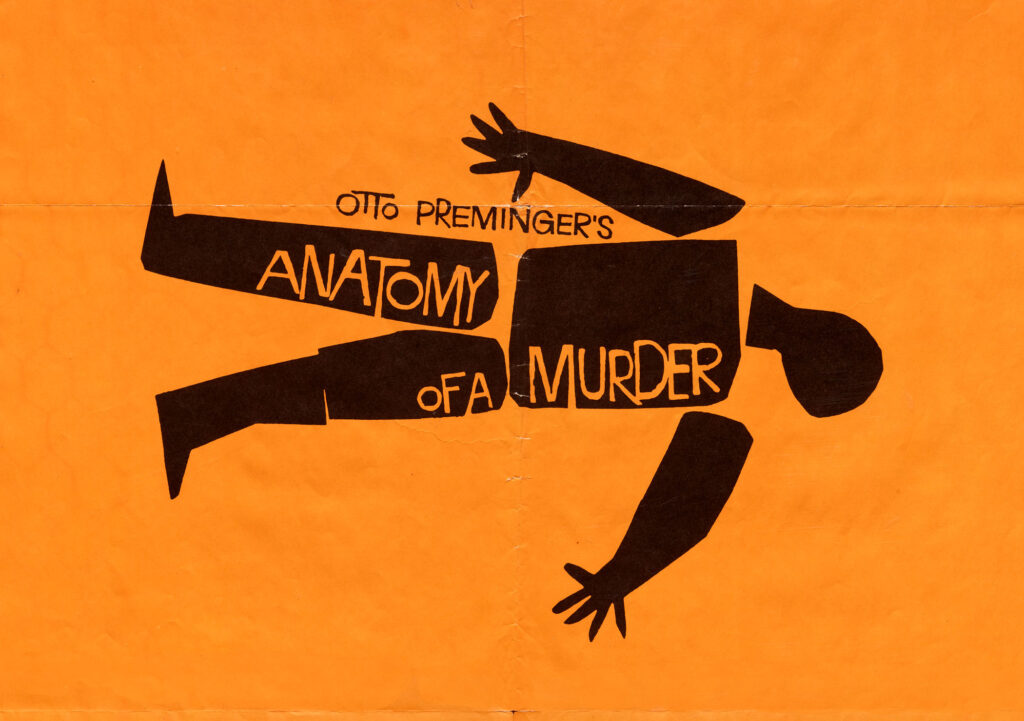
Bass‘s work on The Man with the Golden Arm (1955) was a watershed moment in his career. The film, which dealt with the harrowing subject of drug addiction, required a visual identity that was both evocative and stark. Bass’s poster, featuring a jagged, abstract arm, not only captured the film’s emotional core but also demonstrated his knack for visual storytelling. The title sequence for the same film, featuring kinetic typography and bold, fragmented imagery, was revolutionary, setting a new standard for how opening credits could engage audiences and establish a film’s tone.
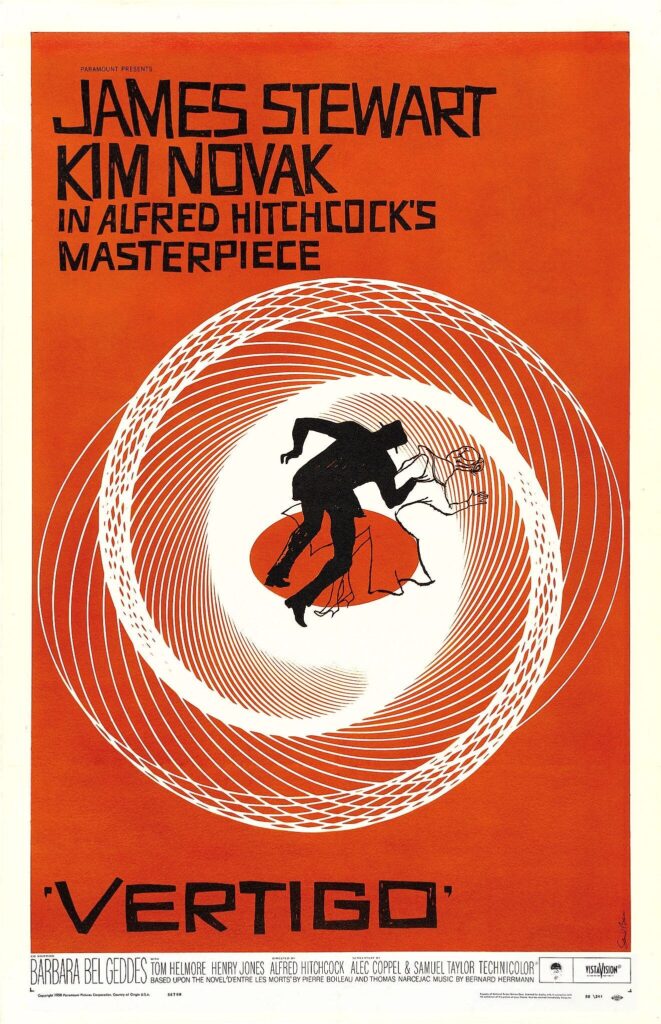
Throughout his career, Bass collaborated with some of Hollywood’s most renowned directors, including Alfred Hitchcock, Stanley Kubrick, and Martin Scorsese. His work for Hitchcock’s films, such as Vertigo (1958), North by Northwest (1959), and Psycho (1960), remains iconic. For Vertigo, Bass crafted a hypnotic swirl motif that reflected the film’s themes of obsession and psychological complexity. His designs were never mere adornments but integral components of the cinematic experience, encapsulating the narrative’s essence in a way that words often could not.
Bass’s minimalist philosophy was rooted in his belief that design should communicate a message with clarity and impact. He famously stated, “Design is thinking made visual.” This principle was evident in his posters, which often featured bold geometric shapes, limited colour palettes, and a deliberate use of negative space. His style was not just about aesthetics; it was about distilling the story to its most essential elements, creating images that were immediately recognisable and profoundly memorable.
In addition to his work in film, Bass also left an indelible mark on corporate branding. He created logos for some of the world’s most recognisable companies, including AT&T, United Airlines, and Warner Communications. These designs, much like his movie posters, were celebrated for their simplicity and timeless appeal. His ability to create visual identities that endured for decades underscored his genius as a designer.
Despite his many accolades, Bass’s influence extends far beyond his individual works. He redefined the role of a designer in the filmmaking process, elevating the title sequence and poster from a marketing tool to an art form. His work paved the way for future generations of designers and filmmakers, inspiring a more integrated approach to visual storytelling.
The legacy of Saul Bass is a testament to the power of design to evoke emotion, convey meaning, and leave a lasting impression. His minimalist approach, far from being simplistic, was a masterful exercise in precision and intent. Bass understood that sometimes, less truly is more. By stripping away the superfluous, he was able to reveal the essence of a story, creating visuals that resonate with audiences to this day.
Bass passed away in 1996, but his influence continues to permeate contemporary design and cinema. His work is studied in art and design schools around the world, and his aesthetic remains a touchstone for designers seeking to blend clarity with creativity. From his iconic movie posters to his groundbreaking title sequences, Saul Bass’s contributions to the world of art and film are nothing short of legendary. He remains, unequivocally, the master of minimalist movie posters.
References
1. Bass, Jennifer, and Pat Kirkham. Saul Bass: A Life in Film and Design. Laurence King Publishing, 2011.
2. “The Art of Saul Bass: A Retrospective.” The Museum of Modern Art. Accessed January 2025. https://www.moma.org/saul-bass.
3. “Saul Bass and the Golden Age of Graphic Design.” Design Observer. Accessed January 2025. https://www.designobserver.com/saul-bass.
4. Rawsthorn, Alice. “Saul Bass: Design and the Movies.” The New York Times. Accessed January 2025. https://www.nytimes.com/saul-bass-design.
5. Heller, Steven. “Minimalism and Mastery: The Work of Saul Bass.” Print Magazine. Accessed January 2025. https://www.printmag.com/saul-bass.
If interested in having an art piece done you can visit my Fiverr Pro account, or like any of my caricatures or animal art, please contact me for details.